

Environmental Noise Control: Data Centers and Energy Facilities
By Jeffrey E. Babich, INCE Bd. Cert.
My colleague, AnnMarie Rowland Hirsh, provided background on environmental noise control and tools that we use to complete our analyses. In the blog published in October 2024, Hirsh described the ways we help reduce noise in urban, suburban, and rural communities. As demand for data centers, oil & gas plants, and other energy facilities increases, BABICHacoustics can assist in evaluating and recommending noise control solutions for these facilities. It is important to involve acoustical consultants early in the conditional use, design, and permitting processes.
Challenges for Data Centers and Energy Companies
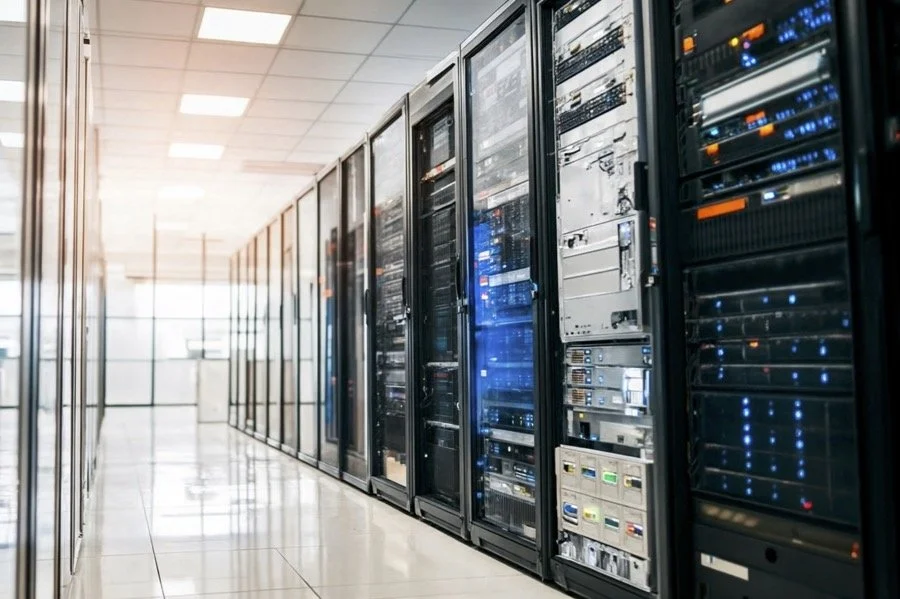
Exponential growth of AI and cloud computing is altering the footprint of the technology industry. These modern facilities require large rooftop cooling arrays to dissipate heat generated by the computing equipment inside. This is the primary source of noise, since they typically run 24/7. Cooling needs are typically highest on the hottest days of the year but may be reduced at night, when temperatures are cooler.
Another demand is the energy required by these facilities, which increases the requirement for multiple backup diesel generators. These are secondary noise sources associated with data centers, as they need to be tested frequently to ensure the facility does not experience interruptions during an outage. The additional electricity from these facilities creates a need for energy production from oil & gas and/or nuclear power facilities.
In the energy sector, noise control is an important safety and environmental challenge. Oil and gas facilities, especially midstream compressor stations and upstream drilling sites, generate low-frequency noise from reciprocating engines and gas turbines that can travel longer distances. In contrast, nuclear power facilities produce "broadband" noise, mainly from steam turbines and cooling towers used for thermal management. This necessitates the use of industrial silencers and buffer zones to reduce the noise impact on workers and communities.
Noise Surveys, Modeling, & Analysis

Achieving acoustical goals is not optional; it is necessary for modern infrastructure development. As data centers and other industrial facilities scale to meet the demands of a digital economy, the main goal of environmental noise control is to bridge the gap between high-output industrial productivity and community noise control requirements. This requires proactive engineering where meeting local noise goals* is integrated into the site's initial design.
The first step in analyzing the noise from a future facility is to provide acoustical surveys to understand existing noise levels during daytime and nighttime hours. This can help determine whether existing noise levels comply with a local noise ordinance. When a noise ordinance does not exist, this survey can be used to review existing conditions and estimate how much louder community noise levels will be after a new facility is operational.
By applying acoustical computer modeling and mitigation technologies, operators understand the noise footprint of their cooling and backup power systems. The goal is to create a facility that delivers the appropriate computational power while meeting the local noise code.
*NOTE: It is uncommon for local noise codes to address tonal or low-frequency noise. Using data from noise surveys allows the facility to meet written noise codes from a legal standpoint but also helps to align noise impacts with community expectations.
Noise Control Solutions
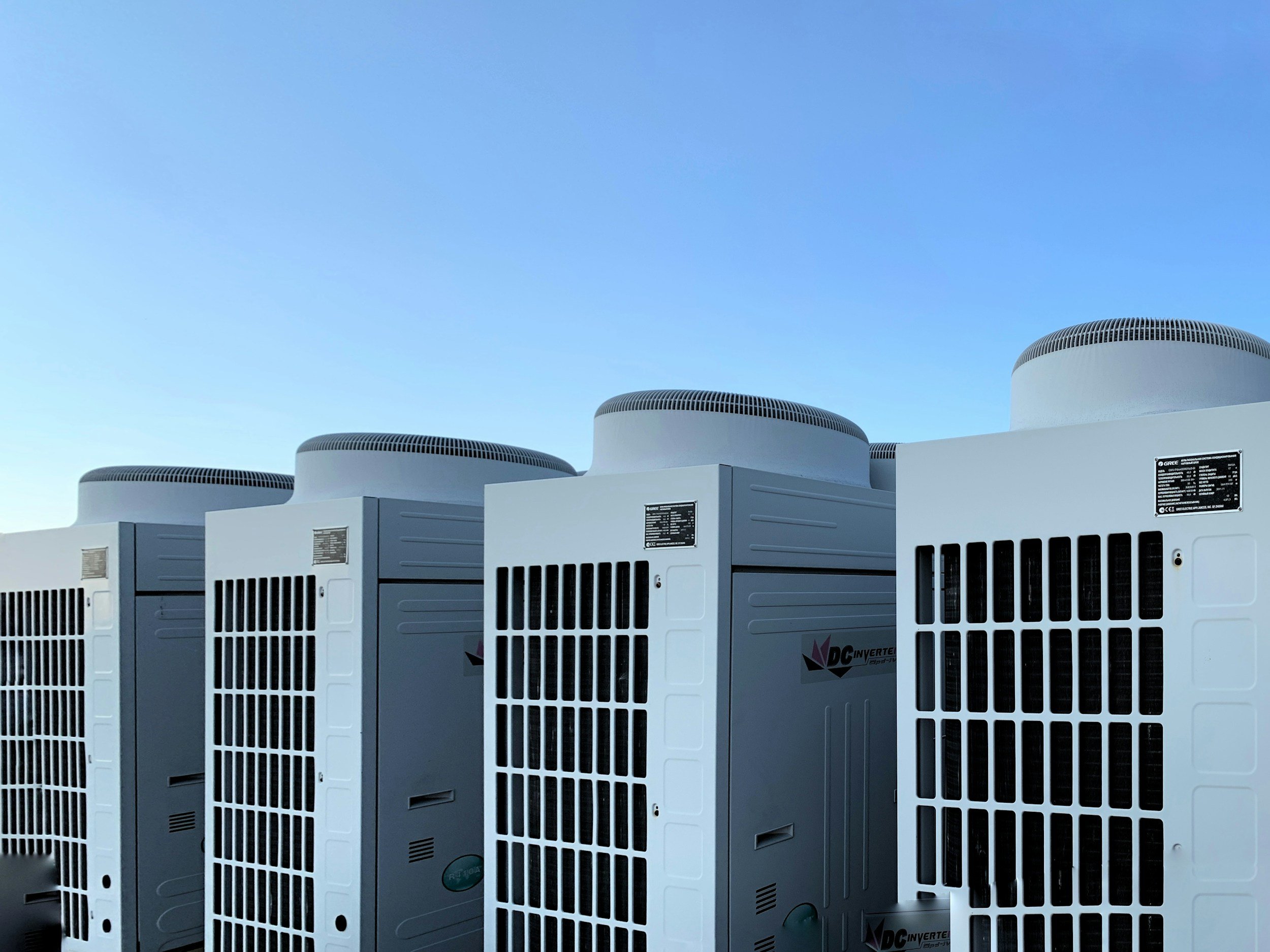
The first step in determining a method to reduce noise is to select low-noise equipment or variable-speed drives to allow equipment to run at lower speeds and possibly lower noise levels. Placing the loudest equipment farther from the most sensitive receiver locations is also a step in the planning stage. It may also be possible in certain locations to introduce noise barriers or sound walls; however, this is often dependent on the wall height and receiver locations.
It is sometimes possible to install sound attenuators or shrouds for fans; however, this may affect fan performance. Acoustic enclosures and mufflers are frequently used to control noise from diesel generators. Other, more custom solutions may also need to be considered and working closely with manufacturers and the entire design team is important.
Conclusion
For a project to be successful, owners and design teams must work closely with local jurisdictions and community members from the outset. Acoustical surveys and computer noise models are the first step in predicting noise levels from data centers and other industrial energy facilities. The design team must work with cooling equipment and backup generator manufacturers to determine the most appropriate noise control solutions. Third-party solutions such as mufflers, enclosures, sound attenuators, and/or noise barriers may be necessary to reduce community noise levels. However, careful analyses of these solutions are needed to determine whether they are feasible and effective.